


Third-party logistics (3PL) reduces operational burden by transferring warehousing, fulfilment, and shipping complexity to specialist providers who already have the infrastructure, staff, and carrier relationships in place. For e-commerce businesses scaling past a few hundred orders per month, managing logistics in-house creates a compounding weight: fixed warehouse costs, peak-season staffing, carrier negotiations, and daily dispatch management all compete for attention that should go toward growth. The industry term for this shift is supply chain outsourcing, and the core mechanism is straightforward. A 3PL absorbs the structural costs and capacity risks of demand fluctuations, so you do not have to.
Why 3PL reduces operational burden through shared warehousing and automation
The most direct way a 3PL cuts operational weight is through shared warehouse networks. Rather than leasing your own facility, hiring warehouse staff, and purchasing pick and pack equipment, you access infrastructure that is already running across multiple clients. Shared warehouse networks lower the need for fixed overhead and maintenance when scaling, because the fixed costs are distributed across every business using that facility. For an e-commerce brand shipping 1,000 orders per month, that difference between paying a fraction of a shared facility versus carrying a full lease is significant.
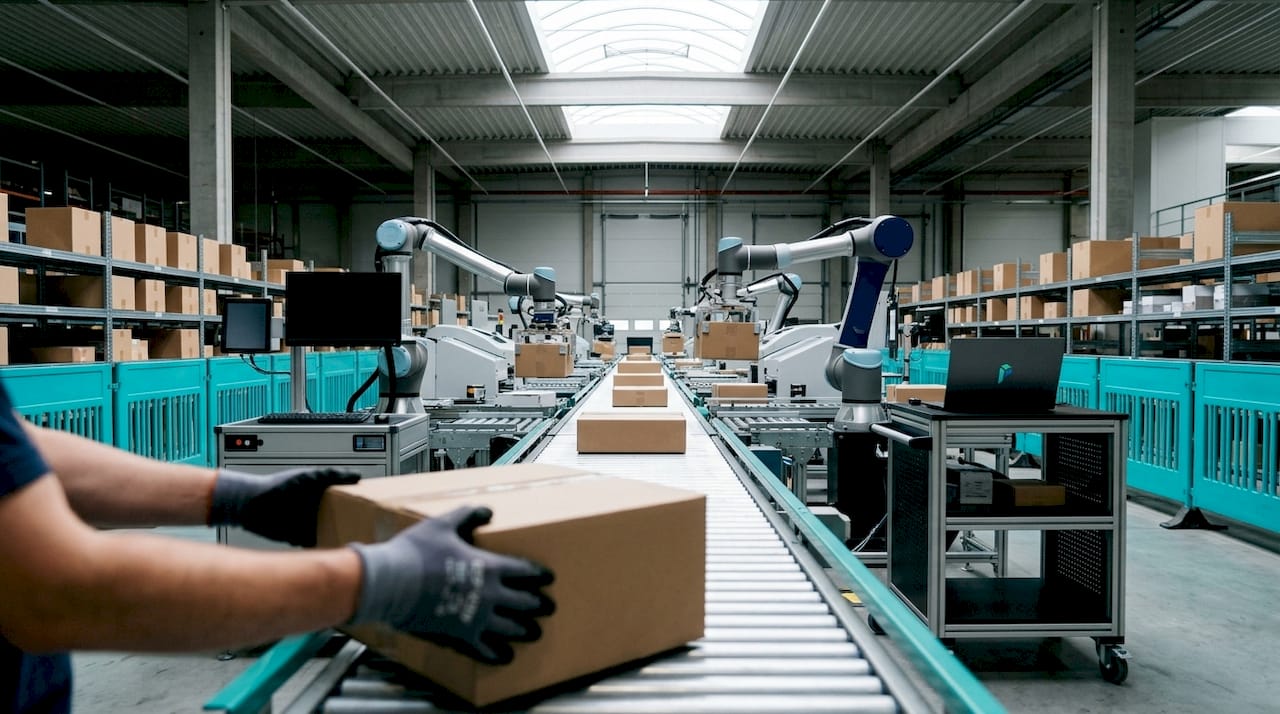
Automation compounds this advantage. Modern 3PL providers deploy robotics, barcode scanning, and pick and pack technology that would cost hundreds of thousands of dollars to implement independently. 3PLs provide skilled warehouse staff and robotic pick/pack without any capital investment from the client. You get the output of an automated warehouse without owning a single piece of equipment.
The staffing benefit is equally practical. Peak periods like Black Friday or the Christmas run-up require temporary labour surges that are expensive and time-consuming to manage in-house. A 3PL absorbs that volatility because its workforce is already scaled to handle multiple clients across different peak cycles.
Key operational burdens a 3PL removes through shared infrastructure:
- Warehouse lease obligations and fit-out costs
- Recruitment, training, and management of warehouse staff
- Equipment purchases and maintenance for pick, pack, and dispatch
- Compliance with workplace health and safety requirements for warehouse operations
- Technology investment for warehouse management systems
Pro Tip: Before signing with a 3PL, ask specifically about their warehouse management system and how it integrates with your sales platform. Providers like Fulfilpackers use a purpose-built order management system — Mintsoft — that connects to 150+ platforms, so your order data flows automatically without manual intervention.
How does 3PL scalability handle demand spikes better than in-house logistics?
In-house logistics teams hit a ceiling during volume spikes. Hiring takes weeks, leasing additional space takes months, and carrier negotiations require volume commitments you cannot guarantee. A 3PL sidesteps all of this because established carrier relationships and processes allow rapid adjustment to global shipping issues and volume changes. The infrastructure is already in place before you need it.
This is the structural advantage that makes 3PL particularly valuable for growing e-commerce brands. When your sales double over a promotional period, your 3PL does not need to scramble. It draws on existing capacity, existing staff, and existing carrier contracts to absorb the increase. Your operational burden stays flat even as your order volume climbs.
 The disruption response capability is equally important. Supply chain disruptions, whether from port delays, carrier failures, or customs issues, require fast pivoting across multiple carrier options. A 3PL with scalable infrastructure to handle volume spikes can reroute shipments and activate backup carriers in ways that a small in-house team simply cannot replicate.
Consider what this means practically for an Australian e-commerce brand:
- No emergency hiring during peak seasons
- No renegotiating carrier rates under time pressure
- No scrambling for additional storage space when inventory builds
- No internal project management required to handle a sudden 3x order surge
- Faster response to shipping disruptions through pre-established carrier networks
The scalability benefit also works in reverse. During slow periods, your costs contract with your volume. You are not carrying the fixed overhead of a warehouse and staff that are underutilised for three months of the year.
What are the hidden costs in 3PL pricing you need to watch?
The role of 3PL in reducing overheads is real, but it comes with a pricing structure that requires careful scrutiny. All-in 3PL pricing bundles rent, labour, supervision and margin, adding a 10 to 25% premium, with surcharges that can increase costs and oversight burdens. This means the burden reduction you expect can be partially offset if you do not manage the commercial relationship with discipline.
The surcharges that catch businesses off guard most often include:
- Overtime charges applied when order volumes exceed agreed thresholds during peak periods
- Temp labour pass-throughs where the 3PL bills you directly for additional staff hired on your behalf
- Change order fees for modifications to packing specifications, kitting requirements, or labelling
- Storage surcharges for long-dwelling inventory or oversized items outside standard dimensions
- Fuel and carrier surcharges passed through from freight partners without notice
The practical implication is that contract management and SLA clarity are not optional extras. They are the mechanism by which you protect the cost savings that 3PL is supposed to deliver. An internal team still needs to govern the relationship, map operational pain points to contract cost drivers, and review invoices against agreed rates.
Pro Tip: Request a full fee schedule before signing, not just a headline rate card. Ask your 3PL to walk through every scenario where additional charges apply. Providers with transparent pricing and no lock-in contracts, like Fulfilpackers, make this conversation straightforward. You can also review 3PL pricing models in detail before committing.
The goal is not to avoid 3PL because of these risks. It is to enter the relationship with clear documentation so the burden reduction is genuine rather than theoretical.
What are the capital and cash flow benefits of outsourcing to a 3PL?
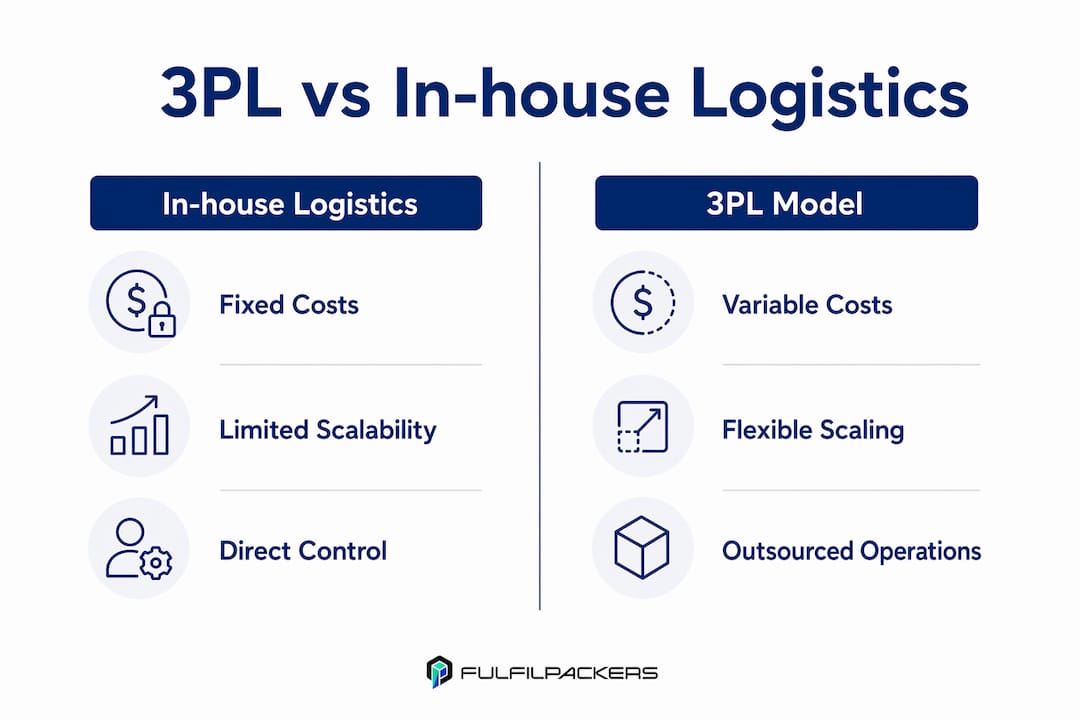
Beyond day-to-day operational relief, 3PL delivers a structural financial benefit by converting fixed logistics costs into variable ones. 3PL frees capital tied up in warehouse space, turning fixed real estate costs into flexible operating expenses. For an e-commerce business at the growth stage, this is not a minor accounting adjustment. It is the difference between capital locked in a lease and capital available for marketing, product development, or inventory investment.
The table below summarises how the cost structure shifts when moving from in-house logistics to a 3PL arrangement.
| Cost category | In-house logistics | 3PL model |
|---|---|---|
| Warehouse space | Fixed lease, regardless of volume | Variable, based on storage used |
| Staff costs | Fixed salaries plus peak hiring | Included in per-order or storage fees |
| Equipment and technology | Capital purchase and depreciation | Included in 3PL service fee |
| Carrier rates | Negotiated individually at low volume | Access to bulk carrier rates via 3PL network |
| Scalability cost | High: requires new investment | Low: scales with order volume |
The carrier rate advantage deserves specific attention. 3PLs negotiate better rates due to volume and relationships, and clients benefit from zone skipping and multi-carrier shipping options that are simply not available to businesses shipping independently. For an Australian brand shipping internationally, access to these networks can reduce per-shipment costs materially.
The cash flow benefit is also worth noting separately. When logistics costs move from fixed to variable, your break-even point drops. A slow month costs less to operate. A strong month scales without a capital injection. That flexibility is genuinely valuable for businesses managing growth without external funding.
For a deeper look at how this cost shift plays out financially, the financial advantage of fulfilment services is worth reviewing in detail.
Key takeaways
3PL reduces operational burden by converting fixed logistics infrastructure into variable, outsourced costs, freeing e-commerce businesses to scale without proportional increases in staff, capital, or management complexity.
| Point | Details |
|---|---|
| Shared warehousing cuts fixed overhead | 3PL networks distribute facility costs across multiple clients, removing lease and equipment obligations. |
| Scalability absorbs demand spikes | Established carrier relationships and existing capacity handle volume surges without new hiring or infrastructure. |
| Hidden costs require contract discipline | 3PL pricing can include a 10 to 25% premium plus surcharges; clear SLAs protect the savings. |
| Fixed costs become variable | Warehouse, staff, and equipment costs shift to per-order or storage fees, improving cash flow flexibility. |
| Carrier access reduces shipping costs | 3PL volume relationships unlock bulk rates and multi-carrier options unavailable to independent shippers. |
The operational reality most guides leave out
From Fulfilpackers’ experience working with growing Australian e-commerce brands, the businesses that get the most from a 3PL partnership are the ones that arrive prepared. Clean SKU readiness and inbound process discipline are not just nice-to-haves. Messy inbound data, inconsistent labelling, and unclear product specifications create corrective work that consumes the internal resources you were trying to free up.