


Value-added 3PL services go beyond standard warehousing, pick and pack, and shipping. They help ecommerce businesses manage the extra operational work that comes with growth, including kitting, labelling, customised packaging, compliance support, returns, and system integrations.
These services are often called value-added services, or VAS. For ecommerce brands, they can be the difference between a 3PL that ships orders and a fulfilment partner that supports how your brand operates and scales.
As order volumes grow, fulfilment becomes more complex. Brands may need to manage new sales channels, retailer requirements, marketplace rules, bundled products, branded packaging, or higher customer expectations. The right value-added logistics services help keep operations consistent, protect the customer experience, and reduce manual work for your internal team.
1. Types of value-added 3PL services: an overview
Value-added 3PL services commonly include kitting, assembly, labelling, packaging, returns management, compliance support, and inventory reporting. These services matter because ecommerce businesses rarely have the same fulfilment requirements.
A supplement brand may need compliant labelling and subscription box kitting. An electronics retailer may need secure packaging, barcode workflows, and careful handling. Understanding the main service types helps you build a logistics strategy that fits your products, channels, and customer expectations.
The primary types of value-added 3PL services include:
Kitting and assembly: Combining individual SKUs into bundles, packs, or ready-to-ship product sets.
Custom packaging and branding: Branded boxes, tissue paper, inserts, and presentation packaging.
Labelling and barcode services: Compliance labels, FNSKU labels, GS1 barcodes, and retail-ready ticketing.
EDI and ASN integration: Electronic data interchange and advance ship notices for retail and wholesale compliance.
Returns management and reverse logistics: Inspecting, restocking, refurbishing, or responsibly disposing of returned items.
Compliance and retail-ready services: Preparing products and shipments to meet retailer, marketplace, or regulatory requirements.
Inventory management and reporting: Real-time stock visibility, reporting, and multi-channel inventory synchronisation.
Pro Tip: Prioritise the services that solve your biggest operational pain points. Retail brands often need EDI and compliance support first. Direct-to-consumer brands usually see the biggest impact from packaging, kitting, and returns management.
2. EDI and ASN capabilities: the compliance-critical service most brands overlook
EDI and ASN support is one of the most important value-added 3PL services for ecommerce brands selling into retailers, marketplaces, or wholesale channels.
EDI, or electronic data interchange, allows order and shipment data to move between systems automatically. ASN, or advance ship notice, gives the receiving party detailed information about what is being shipped before it arrives.
For brands working with major retailers, this is often a requirement, not a nice-to-have. Retail partners may expect accurate carton details, product quantities, barcodes, shipment references, and delivery information before stock reaches their warehouse.
Without this capability, brands can face delays, rejected deliveries, chargebacks, manual admin, and strained retail relationships.
A 3PL with strong EDI and ASN processes can help manage:
Retail order data: Receiving and processing wholesale or retail orders accurately.
Advance ship notices: Sending shipment details before goods arrive at the retailer or marketplace.
Carton and pallet labelling: Preparing labels to match retailer requirements.
Barcode and SKU accuracy: Making sure product and carton data matches the order.
Compliance workflows: Helping shipments meet the rules set by retailers, marketplaces, or trading partners.
This service becomes especially important as a brand moves beyond direct-to-consumer fulfilment. Selling through retail and wholesale channels adds more operational rules, and mistakes can be expensive.
Pro Tip: If you plan to sell through retailers, ask your 3PL whether they can support EDI, ASN creation, carton labelling, and retailer-specific compliance requirements before you commit.
3. Kitting, assembly, and custom packaging
Kitting, assembly, and custom packaging help ecommerce brands create more flexible product offers, improve presentation, and keep fulfilment consistent as order volumes grow.
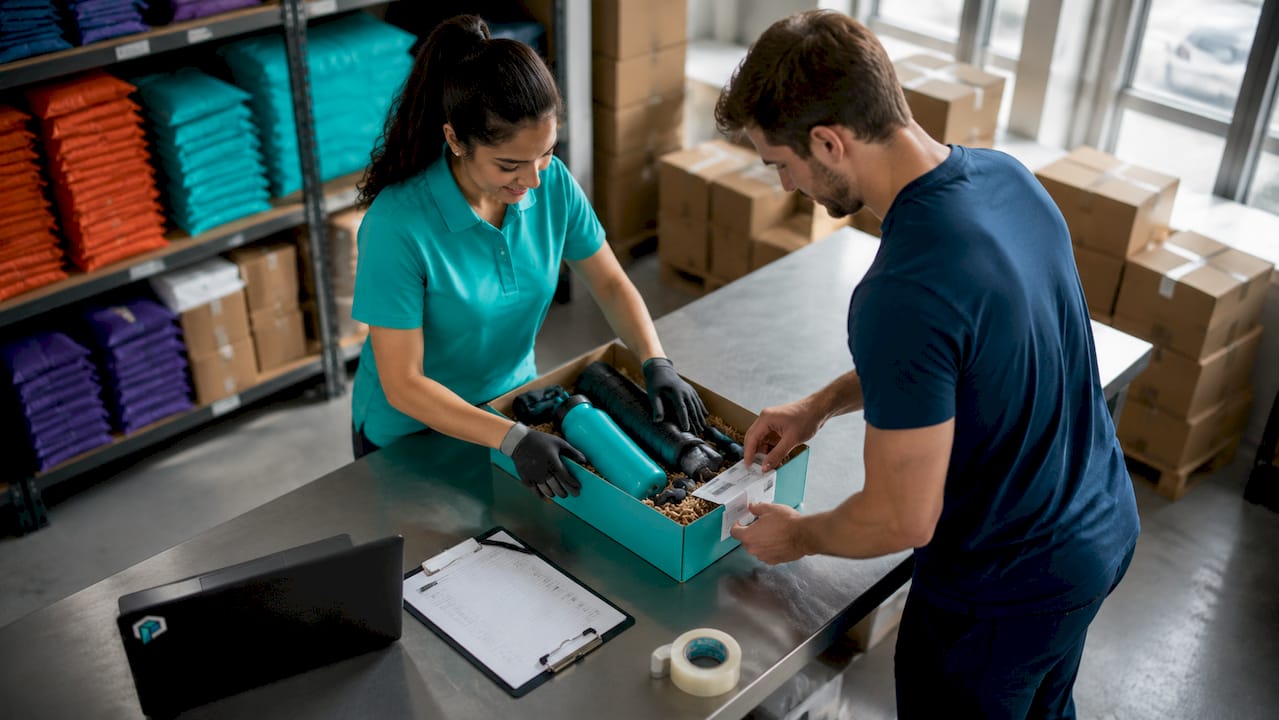
Kitting is the process of combining multiple individual products into one ready-to-ship unit. This is commonly used for subscription boxes, promotional bundles, gift sets, launch packs, and multi-item offers.
Assembly involves light product preparation before fulfilment. This may include inserting components, adding accessories, applying labels, preparing packs, or configuring products before they are shipped.
Custom packaging helps protect the product and strengthen the customer experience. Branded boxes, tissue paper, thank-you cards, inserts, stickers, and custom packing rules all make the unboxing experience feel more considered and consistent.
Key benefits include:
Bundle flexibility: Create or update product bundles without holding large volumes of pre-assembled stock.
Seasonal scalability: Prepare promotional packs for peak periods such as Christmas, Black Friday, product launches, or retail campaigns.
Reduced shipping damage: Use custom-fitted packaging to reduce movement, breakage, and product damage in transit.
Compliance labelling: Apply barcodes, warning labels, country-of-origin markings, and retailer-specific labels correctly.
Brand consistency: Keep presentation consistent across all orders, even as volume increases.
For example, a supplement brand may use kitting to prepare a monthly subscription box with multiple SKUs, a printed insert, and branded outer packaging. An electronics retailer may use custom inserts or protective packaging to secure higher-value items while maintaining a premium presentation.
These services allow ecommerce brands to scale campaigns, bundles, and product lines without adding more manual work to their internal team.
4. Returns management and reverse logistics
Returns management is the process of receiving, inspecting, sorting, and processing customer returns. Reverse logistics is the broader flow of goods from the customer back through the supply chain.
For ecommerce brands, returns can become a major operational cost if they are not managed properly. A strong 3PL returns process helps recover product value, reduce waste, update inventory faster, and improve the customer experience.
A well-structured returns service can include:
Inspection and grading: Assessing returned items as resaleable, repairable, or unsaleable.
Restocking: Returning suitable items to available inventory quickly to reduce stock write-offs.
Refurbishment: Light cleaning, repackaging, relabelling, or repair to make items saleable again.
Responsible disposal: Recycling, donating, or correctly disposing of items that cannot be resold.
Customer visibility: Providing tracking and status updates throughout the returns process.
Returns management is more than an after-sales task. When handled well, it can protect revenue, improve customer trust, and reduce pressure on internal teams.
When returns are connected to a 3PL’s WMS or order management system, inventory can be updated faster and more accurately. This helps prevent overselling, improves stock visibility, and gives ecommerce businesses a clearer view of what is actually available to sell.
Pro Tip: Ask your 3PL how returned stock is graded and how quickly resaleable items are made available again. The faster returns are inspected and restocked, the less revenue is lost through unavailable inventory.
5. Labelling, compliance, and retail-ready services
Labelling services cover the application of barcodes, compliance labels, price tickets, product labels, and carton markings. For ecommerce brands selling through Amazon, major retailers, or international marketplaces, correct labelling is essential.
A missing FNSKU label, incorrect barcode, or non-compliant carton label can lead to rejected stock, chargebacks, delays, and lost revenue. These are not minor admin issues. They directly affect sales and retailer relationships.
Retail-ready services take this further. They can include hang tags, garment ticketing, carton labelling, floor-ready display preparation, and packaging requirements that meet a retailer’s routing guide.
For ecommerce brands moving into wholesale, retail, or marketplace channels, these services help bridge the gap between direct-to-consumer fulfilment and B2B compliance.
A 3PL with strong labelling and compliance processes can help manage these requirements accurately, reducing the need for brands to handle detailed retailer instructions internally as they scale.
6. Inventory management and technology integration
Real-time inventory visibility is one of the most valuable 3PL services for growing ecommerce brands. A 3PL that provides live stock data through a connected platform, rather than relying on spreadsheets or manual updates, gives businesses the information they need to make better decisions around replenishment, promotions, and product availability.
Fulfilpackers uses Mintsoft, a warehouse management system that connects ecommerce orders with inventory, dispatch, tracking, and warehouse operations. With 150+ platform integrations, including Shopify, WooCommerce, and Amazon, Mintsoft helps reduce manual reconciliation and keeps order and inventory data flowing between systems.
Technology integration can also support automated order routing, multi-channel inventory syncing, and clearer reporting across sales channels. For ecommerce businesses selling through multiple platforms, this creates a single source of truth for stock.
The result is fewer overselling issues, faster fulfilment, better stock control, and stronger purchasing decisions as the business grows.
7. Comparing value-added 3PL services: when to prioritise each
Different growth stages and business models call for different value-added services. The right priority depends on your sales channels, product type, customer experience goals, and compliance requirements.
| Service type | Cost complexity | Primary benefit | Best suited for |
|---|---|---|---|
| Kitting and assembly | Medium | Bundle efficiency and order customisation | Subscription brands, gift retailers, product launches |
| Custom packaging | Medium to high | Brand presentation and unboxing experience | Direct-to-consumer brands focused on customer loyalty |
| EDI and ASN integration | High | Retail compliance and chargeback prevention | Brands selling through major retailers or wholesalers |
| Returns management | Low to medium | Cost recovery and customer trust | Apparel, electronics, and other high-return categories |
| Labelling and compliance | Low to medium | Marketplace and retailer compliance | Brands selling through Amazon, major retailers, or export markets |
| Inventory and tech integration | Medium | Real-time visibility and multi-channel accuracy | Multi-channel ecommerce brands with growing SKU ranges |
Use these decision criteria to prioritise:
Compliance requirements: If you sell through major retailers or marketplaces, EDI, ASN, and labelling should come first.
Customer experience goals: If brand differentiation is a major growth driver, custom packaging and kitting will usually have the most visible impact.
Return volume: If returns are becoming a major cost or customer service issue, reverse logistics should be prioritised.
Scalability needs: Choose a 3PL whose value-added services can evolve as your order volume, product range, and sales channels grow.
Fulfilpackers coordinates dispatch through carriers including Australia Post, Aramex, Team Global Express, and Direct Freight Express, helping ecommerce businesses access competitive shipping options without managing each carrier relationship directly.
Key takeaways
The best approach to value-added 3PL services is to match each service to a clear operational need, compliance requirement, or customer experience goal. Most ecommerce brands do not need every service at once. They need the right services at the right stage of growth.
| Point | Details |
|---|---|
| EDI execution matters | Make sure ASN and retail data are generated from accurate WMS information, not manual entry. |
| Kitting and packaging support loyalty | Bundles, inserts, and branded packaging create a more consistent customer experience. |
| Returns management protects revenue | Fast inspection and restocking help recover stock value and keep inventory accurate. |
| Compliance services reduce risk | Correct labelling and retail-ready preparation help prevent marketplace rejections and retailer chargebacks. |
| Technology integration enables scale | Real-time inventory visibility and platform integrations reduce manual reconciliation across sales channels. |
The services that actually move the needle
From working with ecommerce businesses across a range of product categories, one pattern stands out: most brands underestimate the operational depth required to deliver value-added 3PL services well.
It is easy to find a 3PL that lists EDI, kitting, returns, and custom packaging on its website. It is much harder to find one that has built those services into a connected workflow, where systems, warehouse processes, and quality checks work together.
The brands that get the most value from their 3PL relationships do not treat service selection as a one-time decision. They start with the services that solve their most urgent operational, compliance, or customer experience gaps. Then, as their volume and complexity grow, they expand the service mix.
That requires regular reviews, honest performance conversations, and a 3PL partner that is willing to adapt as the business changes.
The important thing to look for is integration. If a 3PL cannot clearly explain how EDI connects to its WMS, how returns update inventory, or how kitting instructions are managed and checked, those are not minor gaps. They are signs of a fragmented operation that may create problems at scale.
Before committing, ask how each value-added service works in practice. Look for evidence of process, visibility, and accountability, not just a list of services.
How Fulfilpackers delivers value-added 3PL services for ecommerce brands
Fulfilpackers is a Gold Coast-based 3PL built for growing ecommerce brands that need more than standard pick, pack, and dispatch.
Value-added services are central to how Fulfilpackers supports clients. From kitting and assembly to custom packaging, compliance labelling, returns processing, and EDI support, the focus is on helping ecommerce businesses manage fulfilment complexity without adding more pressure to their internal team.
Once stock has arrived and the required setup is complete, most clients are up and running within 48 hours. This makes the operational switch faster and more straightforward than many businesses expect.
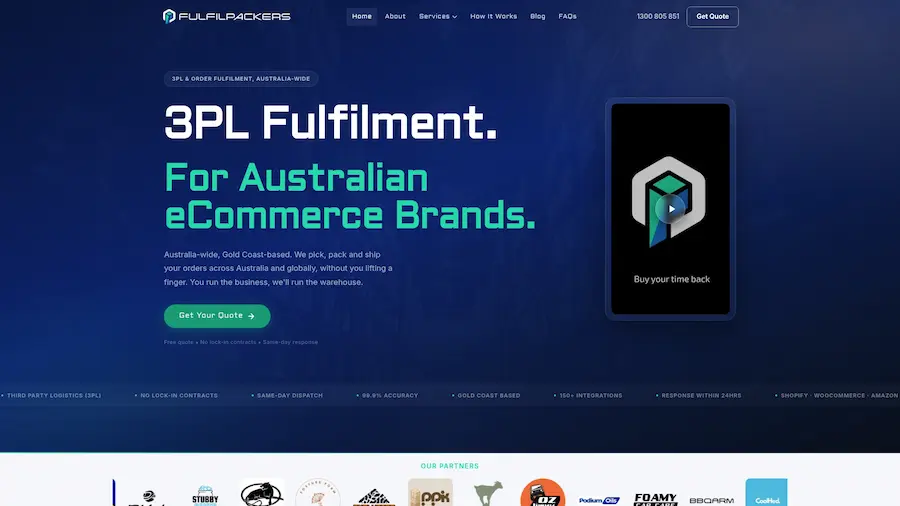
With 98% on-time dispatch, 99.9% accuracy, and 150+ platform integrations through Mintsoft, Fulfilpackers gives ecommerce brands real-time inventory visibility and reliable fulfilment support.
Every client is supported by a dedicated local Customer Success Manager with direct access. No call centres. No ticket queues.
If you are ready to step back from day-to-day logistics and want a fulfilment partner that can support your next stage of growth, explore Fulfilpackers’ 3PL fulfilment services or review our shipping and returns capabilities to see how the service mix fits your operation.
FAQ
What are value-added services in 3PL logistics?
Value-added services are 3PL services that go beyond standard warehousing, pick and pack, and shipping. They can include kitting, custom packaging, labelling, EDI support, returns management, and compliance preparation.
Why does EDI execution matter more than just having EDI?
For 3PL fulfilment, EDI needs to connect with the warehouse management system, order flow, inventory data, and dispatch process. Strong execution means retail orders are processed accurately, ASNs are generated from correct warehouse data, and compliance requirements are met without relying on manual work that can slow fulfilment or create errors.
How do kitting and assembly services benefit ecommerce brands?
Kitting and assembly help ecommerce brands create bundles, subscription packs, gift sets, and product launch offers from bulk stock. This makes fulfilment more flexible, improves packaging efficiency, and supports peak-period campaigns without holding large volumes of pre-assembled inventory.
When should an ecommerce business prioritise returns management as a 3PL service?
Returns management should become a priority when returns are creating extra admin, stock write-offs, customer service pressure, or delays in making resaleable products available again. A strong 3PL returns process helps recover stock value faster and keeps inventory more accurate.
How do I evaluate whether a 3PL’s value-added services are genuinely integrated?
Ask the 3PL to show how each service connects to their WMS and order process. A strong provider should be able to explain how an order is received, picked, packed, shipped, reported, and updated without relying on disconnected manual steps.