


Third-party logistics, or 3PL, means outsourcing warehousing, order fulfilment, and shipping to a specialist logistics provider.
For Australian ecommerce businesses, the signs you need a 3PL partner often appear long before operations reach breaking point. Missed delivery windows, limited warehouse space, rising fulfilment costs, and leadership teams spending more time chasing orders than growing the business are all early indicators that your current setup may be holding you back.
Recognising these signs early can help protect customer satisfaction, reduce operational pressure, and give your business the structure it needs to scale without rebuilding fulfilment from scratch. Today, tools like warehouse management systems, real-time inventory visibility, and client portals are central to what a capable 3PL provider delivers, making the decision to partner clearer than it was even five years ago.
What operational signs indicate your ecommerce business needs a 3PL partner?
The clearest signs that your ecommerce business needs a 3PL partner are found inside your own operations, not generic industry benchmarks.
When your warehouse team is consistently working overtime, orders are backing up, and leadership is spending more time solving fulfilment issues than growing the business, your operational model may have reached its ceiling.
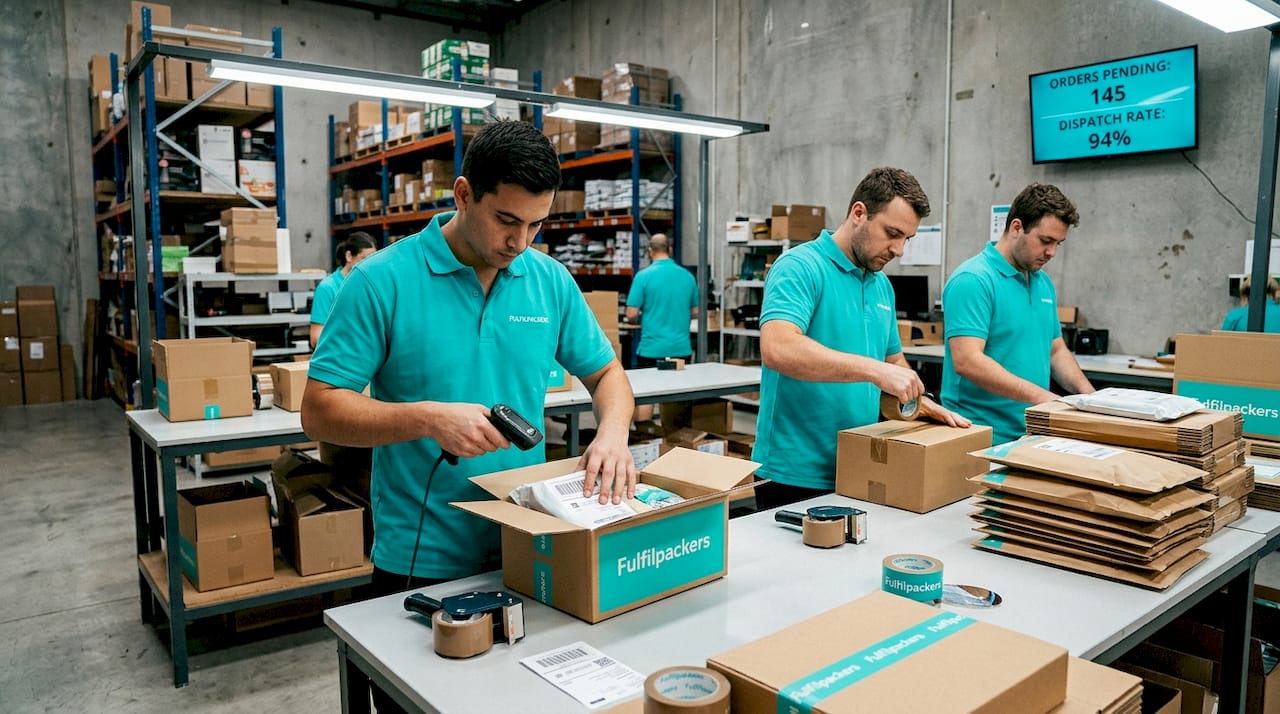
Sustained overtime and expanded shifts are often the first signs that your warehouse labour model is under pressure. From there, productivity can drop, absenteeism can rise, and small issues can quickly compound. For Australian ecommerce brands, this pressure often intensifies around peak periods such as Black Friday and the Christmas trading period, when order volumes spike and existing teams struggle to absorb the load.
The operational signs worth monitoring include:
Consistent shipping delays. Slower fulfilment times, missed dispatch targets, and growing backlogs show your current setup is struggling to keep pace.
Rising order error rates. Picking, packing, and dispatch mistakes create unhappy customers, more returns, and extra work for your team.
Warehouse space exhaustion. If stock is blocking walkways, pick paths, or receiving areas, your physical space has become a growth constraint.
Too much exception handling. Chasing missing shipment data, inventory mismatches, and courier issues pulls your team away from higher-value work.
Leadership bandwidth stretched thin. When founders or managers are resolving fulfilment issues instead of focusing on sales, strategy, or growth, logistics has become a bottleneck.
Pro Tip: Track how much time your leadership team spends on operational problem-solving compared with growth activities each week. If logistics issues are regularly pulling focus away from strategy, sales, marketing, or product development, your fulfilment model may already be limiting your business.
The Australian ecommerce context adds another layer of pressure. Freight networks across Queensland, New South Wales, Victoria, and other major markets carry significant volume, and carrier relationships matter. Without the order volume, systems, and negotiating leverage that a 3PL partner brings, smaller brands can face higher freight costs, reduced service priority, and less flexibility during peak demand.
How to assess your current logistics setup before engaging a 3PL
Before engaging a 3PL provider, it is worth reviewing your current logistics setup. The better your data, systems, and processes are before onboarding, the smoother the transition will be.
If a business moves to a 3PL without cleaning up its internal processes first, the same problems can follow it into the new warehouse. Inaccurate inventory, unclear packaging rules, missing product data, and undocumented fulfilment steps can all slow down onboarding and create avoidable issues.
Start by reviewing these key areas:
Technology integration. Check whether your ecommerce platform, order management system, and inventory tools can connect with a 3PL warehouse management system. Platforms like Shopify, WooCommerce, and similar ecommerce systems should be able to integrate cleanly with the right 3PL setup.
Inventory accuracy. Make sure your stock records are reliable. If inventory is being tracked across multiple spreadsheets or disconnected systems, those gaps need to be resolved before the handover.
Order volume patterns. Review your average monthly orders, seasonal peaks, and recent growth trends. This helps determine the right fulfilment model, storage requirements, and staffing support.
Fulfilment processes. Document how orders are picked, packed, kitted, labelled, and shipped. Include packaging preferences, bundle instructions, returns handling, and any special requirements.
Staffing pressure points. Identify which roles are overloaded, which tasks depend on the founder or operations manager, and where the biggest operational bottlenecks sit.
| Readiness area | What to check |
|---|---|
| Technology integration | Can your ecommerce platform connect to a 3PL WMS? |
| Inventory data quality | Are stock levels accurate and updated consistently? |
| Product data | Are SKUs, weights, dimensions, barcodes, and descriptions complete? |
| Order volume data | Do you understand your monthly volume and seasonal peaks? |
| Process documentation | Are pick, pack, kitting, packaging, and returns steps written down? |
| Staffing clarity | Are fulfilment responsibilities clearly defined and not founder-dependent? |
Pro Tip: Export your product and inventory data before speaking with a 3PL. Check for duplicate SKUs, missing weights, incomplete product descriptions, and inconsistent naming. Clean data is one of the fastest ways to make onboarding smoother and reduce early fulfilment issues.
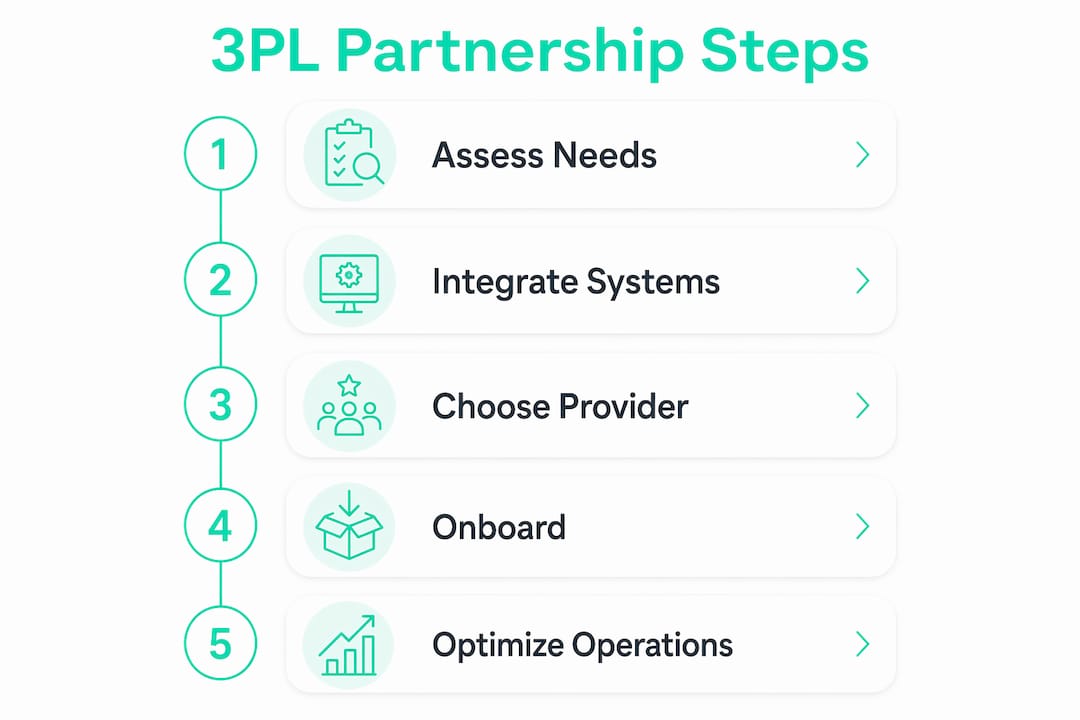
What improvements can a 3PL partner deliver for your ecommerce business?
The benefits of a 3PL partner extend well beyond freeing up warehouse space. A well-matched 3PL can improve fulfilment speed, reduce operational pressure, strengthen inventory visibility, and give your team more time to focus on growth.
The core improvements include:
Scalability during peak seasons. A 3PL helps absorb volume spikes without requiring you to hire, train, and manage temporary warehouse staff. This is especially valuable for Australian ecommerce brands during the November to January peak trading period.
Access to specialised fulfilment technology. Purpose-built warehouse management systems, barcode scanning, and pick verification help reduce errors and improve consistency at scale.
Reduced labour pressure. Outsourcing pick, pack, and dispatch removes the need to manage warehouse rosters, recruitment, and day-to-day fulfilment staffing. The bigger gain is often the operational headspace it gives back to your team.
Improved shipping speed and reliability. 3PLs with established carrier relationships and consolidated freight volumes can often access stronger service levels than individual ecommerce brands can negotiate on their own. Direct cost savings will depend on your current setup, but reliability and process consistency are often immediate improvements.
Better operational visibility. Client portals and real-time dashboards give you clearer visibility over inventory levels, order status, dispatch performance, and fulfilment issues. This replaces long email chains and manual updates with information your team can access when they need it.
Clearer exception management. A good 3PL does more than store and ship products. It helps manage the operational issues that slow businesses down, including inventory discrepancies, carrier delays, returns, address issues, and special handling requirements.
For Australian ecommerce brands, these improvements compound quickly. Faster dispatch, fewer errors, better inventory visibility, and stronger carrier processes all contribute to a better customer experience.
The case for outsourcing becomes clearest when the hidden cost of managing fulfilment in-house starts outweighing the visible cost of a 3PL partner. That cost is not only warehouse space or labour. It is also leadership time, hiring pressure, seasonal stress, customer service workload, and the growth opportunities your team cannot focus on while logistics keeps pulling them back in.
What mistakes should you avoid when choosing a 3PL partner?
Selecting the wrong 3PL, or onboarding before your business is ready, can create new operational problems instead of solving existing ones. Most issues come from poor preparation, unclear expectations, or choosing a provider that does not fit your business model.
The most common mistakes to avoid include:
Choosing a 3PL that does not match your volume profile. Some 3PLs are better suited to steady, predictable volume, while others are built for overflow, project work, or highly variable demand. Before choosing a provider, make sure their warehouse model, staffing structure, and systems can support your current order volume and future growth.
Underestimating data readiness. Inconsistent SKU data, missing product dimensions, unclear product descriptions, and undocumented pick rules can slow down onboarding. Clean product data helps your 3PL set up inventory, storage, picking, packing, and shipping processes correctly from the start.
Ignoring escalation pathways. A strong 3PL agreement should make it clear how errors, delays, stock discrepancies, and urgent issues are reported, investigated, and resolved. Without clear escalation pathways, small issues can become larger operational problems.
Prioritising cost over accountability. The cheapest quote does not always deliver the lowest total cost. Poor accuracy, slow dispatch, weak communication, and hidden fees can quickly outweigh any saving on pick and pack rates. Pricing should be assessed alongside service levels, systems, communication, and operational reliability.
Accepting limited visibility. If a 3PL cannot provide clear visibility over orders, inventory, dispatch status, and fulfilment performance, your team may still spend too much time chasing updates. Real-time access through a client portal or warehouse management system should be part of the evaluation.
| Selection factor | Red flag | Green flag |
|---|---|---|
| Technology | No client portal or WMS access | Real-time order and inventory visibility |
| Accountability | Vague service levels and no error process | Clear accuracy targets and escalation steps |
| Pricing | Hidden fees, unclear minimums, or complex charges | Transparent, itemised pricing |
| Communication | Ticket queues with no clear owner | Direct access to an account manager or support contact |
| Onboarding | Little focus on SKU data, packaging, or integrations | Structured onboarding with clear setup requirements |
Pro Tip: Ask each 3PL to walk you through what happens when an order is dispatched incorrectly. Their answer will show you how they handle accountability, communication, and problem-solving when something goes wrong.
What technology should you expect from a 3PL partner?
Technology transparency should now be a baseline expectation from a 3PL partner, not a premium feature. For ecommerce merchants, the right systems make it easier to track stock, monitor orders, reduce errors, and manage fulfilment without relying on long email chains or manual updates.
The technology capabilities worth looking for include:
A purpose-built WMS. A warehouse management system should support barcode scanning, pick verification, real-time stock updates, and clear order tracking. Fulfilpackers uses Mintsoft, a WMS that connects ecommerce orders with warehouse operations, inventory, dispatch, and tracking.
A shared client portal. A client portal gives merchants visibility over stock levels, orders, dispatch status, and fulfilment activity. This helps replace scattered email updates with structured information that can be accessed when needed.
Automated platform syncing. Orders from platforms such as Shopify, WooCommerce, Amazon, and other ecommerce channels should flow into the 3PL’s WMS automatically. This reduces manual handling, improves order accuracy, and helps avoid delays caused by disconnected systems.
Fulfilment performance reporting. Dispatch performance, order accuracy, returns activity, and inventory movements should be easy to review. A strong 3PL should give clients visibility over what is happening operationally, not leave them waiting for manual reports.
Inventory visibility. Real-time or regularly updated inventory data helps ecommerce businesses make better decisions around stock availability, replenishment, promotions, and customer communication.
The right 3PL technology reduces the uncertainty that can come with outsourcing fulfilment. When you can see what stock is available, which orders have been dispatched, and where exceptions need attention, the relationship becomes easier to manage.
Instead of relying on trust alone, strong technology gives both the ecommerce business and the 3PL partner a shared view of the operation.
Key takeaways
The clearest signs you need a 3PL partner are operational. Sustained overtime, rising error rates, leadership time consumed by logistics, and warehouse space that can no longer support growth are all indicators that your fulfilment model may have reached its limit.
| Point | What it means |
|---|---|
| Operational signs come first | Overtime, backlogs, dispatch delays, and order errors often reveal capacity issues before they appear clearly in financial reports. |
| Data readiness matters | Clean SKU data, accurate inventory records, and documented processes make onboarding faster and reduce avoidable issues. |
| The right fit is important | Choose a 3PL model that matches your order volume, product type, storage needs, and growth plans. |
| Technology is essential | Look for WMS integration, real-time inventory visibility, automated order syncing, and a client portal. |
| Accountability drives value | Clear escalation paths, service expectations, and communication processes protect your business more than a low per-order rate alone. |
Our perspective on knowing when to make the move
At Fulfilpackers, we speak with ecommerce business owners every week who are trying to work out whether now is the right time to move to a 3PL.
The pattern is often the same. The business grows past a comfortable threshold, the team absorbs the extra load through overtime and manual workarounds, and then one difficult peak period creates a backlog that takes weeks or months to recover from. By that point, the cost of staying in-house is often higher than the cost of outsourcing.
What we have found is that the decision to engage a 3PL is rarely about warehouse space alone. It is usually about visibility, control, and exception management. Businesses that are overwhelmed by logistics are often dealing with information gaps. They cannot easily see where stock is, why an order was delayed, which carrier issue needs attention, or which part of the fulfilment process is creating repeat problems.
A strong 3PL partner helps solve this by giving the business clearer visibility and taking ownership of the operational issues that slow growth down.
The other important factor is onboarding preparedness. This is one of the biggest variables in how quickly a 3PL partnership succeeds. Businesses that arrive with clean product data, documented processes, and a clear understanding of their order volumes usually transition more smoothly. Those that treat onboarding as something the 3PL will fully solve for them often take longer to stabilise.
Our advice is to start assessing the signs early, before the next peak season forces the decision. The businesses that engage a 3PL from a position of readiness, rather than pressure, usually get better outcomes, smoother onboarding, and a stronger long-term partnership.
— Fulfilpackers
How Fulfilpackers supports Australian ecommerce brands
Fulfilpackers is a Gold Coast-based 3PL built for growing Australian ecommerce brands that need reliable fulfilment, clear communication, and room to scale.
If the operational signs covered in this article sound familiar, the next step is to review whether your current setup can keep supporting growth. Fulfilpackers helps ecommerce businesses take the pressure off their team by managing warehousing, pick and pack, order dispatch, kitting, returns, and freight support.
Clients get access to Mintsoft, a warehouse management system that connects ecommerce orders with inventory, dispatch, tracking, and warehouse operations. With 150+ platform integrations, Fulfilpackers helps reduce manual handling and gives brands clearer visibility over their fulfilment.
Every client is supported by a dedicated Customer Success Manager with direct access, not a call centre. There are no lock-in contracts, and the focus is on building a fulfilment partnership that gives ecommerce brands more control, more visibility, and more time to grow.
Explore Fulfilpackers’ ecommerce fulfilment services to see how we can take the operational load off your team and support your next stage of growth.
FAQ
What are the main signs you need a 3PL partner?
The main signs include shipping delays, rising order errors, limited warehouse space, staff overtime, and leadership time being pulled into logistics instead of growth.
When should an Australian ecommerce business hire a 3PL?
There is no single order volume that applies to every business. The right time is usually when fulfilment is taking time, focus, or capacity away from sales, marketing, product development, and growth.
What is the difference between an asset-based and non-asset 3PL?
An asset-based 3PL operates its own warehouse, team, systems, and fulfilment processes. This can provide more direct control and accountability over your stock and orders.
A non-asset 4PL uses third-party networks or partner facilities to coordinate logistics services. This can suit overflow, variable demand, or specific freight needs, but it is important to understand how visibility, accountability, and service levels are managed.
How do I prepare my business for 3PL onboarding?
Clean your inventory data, confirm SKU accuracy, document your pick and pack processes, and make sure product weights, dimensions, barcodes, and descriptions are complete.
Why is technology transparency important when choosing a 3PL?
Technology transparency gives you visibility over inventory, order status, dispatch activity, and fulfilment performance. A client portal or WMS connection helps avoid the black-box warehouse experience.