

3PL fulfilment is the outsourcing of warehousing, order processing, picking, packing, and shipping to an external specialist provider rather than managing those functions in-house. For ecommerce businesses operating in Queensland, this model has become a practical path to scaling without the overhead of owning or leasing warehouse space and managing fulfilment internally. Providers like Fulfilpackers on the Gold Coast use systems such as Mintsoft to help connect ecommerce orders with warehouse operations, inventory, dispatch, and tracking. The standard industry term is third-party logistics, or 3PL, and understanding how it works is the first step toward making a sound decision for your business.
What does 3PL fulfilment in QLD actually cover?
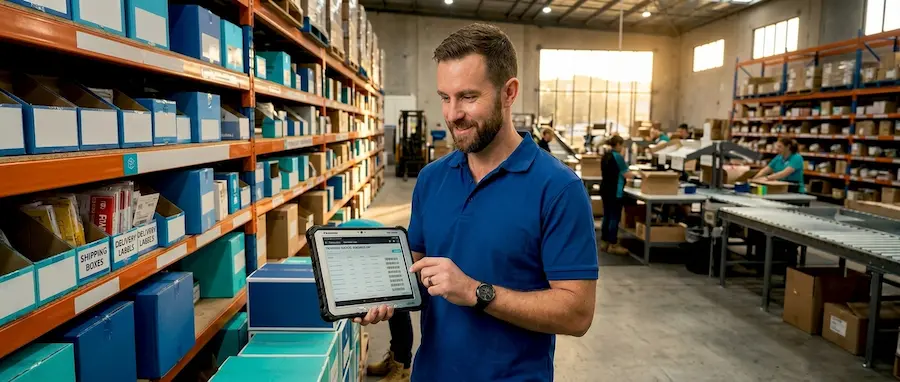
A 3PL provider manages the operational tasks that happen after a customer places an order. The exact scope can vary depending on the provider and the needs of the ecommerce business, but most services are designed to help brands store stock, process orders, dispatch parcels, and manage returns more efficiently.
Most Queensland 3PL providers offer support across the following areas:
Inventory storage: Stock is held in the provider’s fulfilment centre and tracked through warehouse software so both the business and warehouse team have visibility over what is available.
Pick and pack: Once an order comes through, the provider picks the correct items, packs them according to the agreed requirements, and prepares the parcel for dispatch.
Carrier coordination and shipping: The 3PL manages the dispatch process through carriers such as Australia Post, Aramex, Team Global Express, and Direct Freight Express. Depending on the provider, this may also give ecommerce businesses access to more competitive shipping rates than they could secure on their own.
Returns management: Returned goods can be received, checked, and restocked by the 3PL, helping reduce the internal admin that comes with reverse logistics.
Value-added services: Many providers, including Fulfilpackers, also offer services such as kitting, assembly, custom packaging, labelling, and other product-specific packing requirements.
Technology also plays an important role. A good 3PL setup should connect your sales channels with the warehouse workflow, helping orders move from online store to dispatch without unnecessary manual handling.
Pro tip: Before speaking with a 3PL provider, map out every logistics task your team currently handles. This gives you a clearer scope of what you need support with and helps avoid paying for services you do not need, or overlooking services that would make a real difference.

Asset-based 3PL vs non-asset 3PL / 4PL: which model suits your business?
The distinction between an asset-based 3PL and a non-asset 3PL, often referred to as a 4PL, is one of the more important decisions Queensland ecommerce businesses need to understand, yet it is often overlooked.
Asset-based 3PLs directly operate their fulfilment centres, equipment, systems, and warehouse teams. This gives them greater control over the people, processes, and day-to-day operations behind your fulfilment, as well as clearer authority when something needs to be fixed.
Non-asset 3PLs, or 4PL providers, coordinate fulfilment through a network of third-party warehouses and carriers. This can offer flexibility, particularly across multiple markets, but it may also reduce direct control over warehouse operations, staff training, communication, and issue resolution.
| Feature | Asset-based 3PL | Non-asset 3PL / 4PL |
|---|---|---|
| Operational control | Direct control over fulfilment operations | Coordinated through partners |
| Escalation speed | Faster, clearer authority | Depends on third-party response times |
| Labour stability | Trained warehouse team operating under one system | May vary across locations or providers |
| Pricing model | Often clearer and more consistent | Can vary depending on provider network and market conditions |
| Best suited for | Predictable, growing order volume | Multi-location or variable market needs |
Your volume profile and operational needs should help determine which model suits your business. If you ship consistent volumes and need reliable service levels, an asset-based provider can offer clearer accountability. If your business sells across multiple markets or needs a broader fulfilment network, a non-asset model may offer the geographic flexibility you need.
The accountability gap is worth considering. With a non-asset provider or 4PL, a fulfilment issue may need to pass through multiple parties before it reaches someone who can resolve it. That delay can affect customer experience, especially when the issue involves a time-sensitive order, stock discrepancy, carrier problem, or urgent change request.
Pro tip: Ask any prospective 3PL provider how they handle urgent order interceptions. For example, if an order has the wrong address, needs to be cancelled, or must be stopped before dispatch, who receives that request and how quickly can they act on it? The answer will tell you a lot about operational control, communication, and whether someone can step in before the mistake becomes more expensive.
What benefits do Queensland ecommerce businesses gain from 3PL?
Outsourcing to a 3PL can reduce fixed warehousing and labour costs, improve fulfilment efficiency through established carrier relationships, and give ecommerce businesses access to logistics technology they may not be able to justify building themselves. These are not marginal gains. For a business shipping hundreds or thousands of orders per month, the operational lift can be significant.
The core benefits Queensland sellers often look for include:
Cost reduction: Shared warehousing means you pay for the space and labour you actually use, rather than maintaining a fixed facility through slower periods.
Scalability: A quality 3PL can absorb volume spikes, whether from a promotional campaign or a seasonal peak, without requiring you to hire temporary staff or lease additional space.
Technology access: Warehouse management systems, barcode scanning, and real-time inventory tracking are built into the 3PL’s infrastructure. You benefit from the technology without the capital investment.
Carrier rate advantages: 3PLs consolidate shipping volumes across multiple clients, which can give them negotiating leverage with carriers that individual sellers may not be able to access on their own.
Operational focus: 3PL outsourcing enables your team to concentrate on sales, marketing, and product development rather than warehouse operations. This is where most ecommerce growth actually happens.
For Queensland businesses specifically, working with a 3PL can make fulfilment more manageable as the business grows. Instead of trying to manage stock, packing, carrier relationships, and dispatch internally, brands can lean on an established fulfilment operation while they focus on sales, marketing, product, and customer experience.
How do you choose the right 3PL provider in Queensland?
Choosing a 3PL provider is an important operational decision, so it is worth taking a structured approach before making the move. The right provider should not only be able to store and send your stock, but also support the way your ecommerce business actually operates.
Define your service requirements clearly: Start by listing the logistics tasks you need support with, such as storage, order fulfilment, returns, kitting, assembly, custom packaging, or freight coordination. 3PL services can vary significantly between providers, so having a clear scope helps avoid misalignment later.
Assess technology compatibility: Confirm the provider can connect with your ecommerce platform and key business systems. Fulfilpackers, for example, uses Mintsoft to connect ecommerce orders with warehouse operations, inventory, dispatch, and tracking. This helps reduce manual work and keeps fulfilment moving through one connected workflow.
Evaluate the asset-based versus non-asset model: Consider whether an asset-based 3PL or non-asset 3PL / 4PL model best suits your volume, service expectations, and growth plans. If accountability, direct communication, and operational control matter to your business, this distinction is worth understanding properly.
Review communication and accountability: Before choosing a provider, ask how issues are handled when something needs attention. Who responds to order queries? Who manages carrier issues? Who can help with an urgent order interception before dispatch? Clear communication matters as much as the warehouse process itself.
Understand the pricing structure in full: Ask for a complete breakdown of fees, including storage, pick and pack, inbound receiving, returns, packaging, special handling, and any monthly charges. Transparent pricing and flexible terms are strong indicators that the provider is confident in the service they deliver.
Consider operational fit: The right 3PL should feel like an extension of your business, not a disconnected warehouse. Look for a provider that understands your products, packaging requirements, customer expectations, sales channels, and the level of support you need as you grow.
For Queensland ecommerce businesses, the best 3PL choice is usually the provider that gives you the right balance of technology, communication, operational control, pricing clarity, and practical support. Location matters, but the day-to-day service model matters more.
Common pitfalls when switching to 3PL fulfilment in QLD
Moving to a 3PL is not a set-and-forget decision. Queensland ecommerce businesses that struggle with the transition typically encounter one or more of the following issues.
Unclear escalation paths: With non-asset providers especially, operational issues can take longer to resolve if no single party has clear authority to act. This is one of the most common sources of service breakdown.
Hidden costs: Setup fees, minimum storage charges, special handling surcharges, packaging costs, and peak season rate adjustments are not always obvious in an initial quote. Request a full fee schedule and model your costs at both average and peak volumes before making a decision.
Underestimating integration effort: Connecting your ecommerce platforms to a new 3PL’s warehouse management system takes time and testing. Systems like Mintsoft can reduce manual work by connecting orders, inventory, dispatch, and tracking, but setup still needs to be managed properly. At Fulfilpackers, once stock has arrived and the required setup is complete, it is usually around a 48-hour turnaround to begin fulfilment.
Weak SLA definitions: A provider may say they have your back, but that should also be reflected in the agreement and service expectations. Look for clear wording around dispatch cut-off times, accuracy targets, communication standards, escalation processes, and reporting. Vague language can make it harder to understand what is actually being committed to.
Inadequate planning for volume spikes: Notify your 3PL of upcoming promotions, product launches, or seasonal peaks as early as possible. Providers need lead time to allocate staff, space, and operational capacity. Surprises during peak periods are often where fulfilment relationships come under pressure fastest.
What to look for instead: A good 3PL relationship should feel clear before stock arrives. You should understand the fees, the onboarding steps, the communication process, the escalation pathway, and what service standards are actually written into the agreement. The goal is not only to choose a provider who says the right things, but one whose processes, terms, and day-to-day communication back those promises up.
Key takeaways
3PL fulfilment can be a practical way for Queensland ecommerce businesses to scale without taking on the fixed cost and operational pressure of managing everything in-house. The right provider should match your business model, order volume, technology needs, packaging requirements, and expectations around communication and accountability.
| Point | Details |
|---|---|
| Define scope before engaging | Know which logistics functions you need covered so you are not paying for services you do not need or missing support that would make a real difference. |
| Asset-based providers offer clearer accountability | Direct operational control can make it easier to resolve fulfilment issues quickly and clearly. |
| Technology integration is important | Confirm the provider can connect with your ecommerce platform and support the systems your business relies on. |
| Agreements should reflect the service promised | Escalation paths, communication expectations, pricing transparency, and service standards should be clear in writing. |
| Queensland presence can have practical advantages | A Queensland-based provider may make inbound coordination, communication, and operational support easier for businesses growing from this region. |
What we have learned from working with Queensland ecommerce brands
One of the biggest misconceptions we see is that switching to a 3PL will automatically reduce costs from day one. Sometimes it can, but not always immediately.
The bigger benefit is often the time, focus, and operational pressure it removes from the business. When founders and teams are no longer spending hours managing stock, packing orders, chasing carriers, or dealing with fulfilment admin, that time can be redirected into sales, marketing, product development, and customer experience. That shift is where the real long-term value often shows up.
We have also seen businesses choose a 3PL based on price alone, only to find that the cheapest option is not always the lowest-cost option in practice. If communication is slow, accountability is unclear, or issues take too long to resolve, the impact can show up quickly through customer complaints, refunds, delays, and internal frustration.
Another important pattern is the technology gap. Businesses that take the time to set up their ecommerce platform and warehouse workflow properly from the start usually have a much smoother transition. Clean integrations, accurate product data, and clear inventory visibility make it easier for orders to move through the fulfilment process without unnecessary manual handling.
Our honest advice is to look beyond the headline rate when evaluating 3PL providers in Queensland. Price matters, but so do accountability, communication, integration capability, packaging requirements, and the provider’s ability to support your business as it grows.
The right 3PL should not only help you send orders. It should make the operational side of your business feel clearer, more manageable, and more scalable.
How Fulfilpackers supports Queensland ecommerce fulfilment
Fulfilpackers is a Gold Coast-based, asset-based 3PL provider built for growing ecommerce brands. Our ecommerce fulfilment services cover warehousing, pick and pack, order dispatch, kitting and assembly, returns, and freight forwarding, with 150+ platform integrations through our Order Management System, Mintsoft.
There are no lengthy lock-in contracts and no call centres. Every client gets a dedicated customer success manager with direct access, so communication stays clear, practical, and personal.
If you are ready to step back from day-to-day logistics and want a fulfilment partner that can support your next stage of growth, Fulfilpackers is built for that. The starting point is a straightforward conversation about your current volumes, products, packaging requirements, and what you need a logistics partner to handle.
FAQ
What is 3PL fulfilment in Queensland?
3PL fulfilment in Queensland is the outsourcing of warehousing, order picking, packing, and shipping to a specialist third-party logistics provider. The ecommerce business keeps control of its brand, sales, marketing, and customer experience, while the 3PL manages the operational side of getting orders out the door.
How does 3PL differ from in-house fulfilment?
In-house fulfilment means the business manages its own storage, staff, packing process, dispatch, and carrier relationships. A 3PL provider handles those functions externally, giving ecommerce businesses access to established fulfilment processes, warehouse systems, carrier relationships, and scalable support without having to build the full operation themselves.
What is the difference between asset-based and non-asset 3PL?
An asset-based 3PL directly operates its fulfilment centres, warehouse systems, equipment, and team. This usually gives them clearer control over day-to-day operations and faster authority when something needs attention. A non-asset 3PL, often referred to as a 4PL, coordinates fulfilment through third-party warehouse and carrier networks, which can offer flexibility but may reduce direct operational control.
How many orders per month do I need to justify using a 3PL in QLD?
There is no single order number that applies to every business. Order volume matters, but so do product size, storage needs, packaging requirements, shipping complexity, returns, and how much time your team is spending on fulfilment. For many growing ecommerce businesses, 3PL becomes worth considering when fulfilment starts taking time away from sales, marketing, product development, or customer service.
What should I check before choosing a 3PL provider?
Check the full fee schedule, platform compatibility, onboarding process, packaging requirements, communication channels, escalation process, service expectations, and whether the provider uses an asset-based or non-asset model. It is also worth confirming what is written into the agreement, not only what is said during the sales process. Clear pricing, clear accountability, and clear communication usually matter more than the lowest headline rate.